How to Walk Your Dog Hands-Free: The Complete Guide

Every dog owner knows the feeling. You're juggling a leash in one hand, a coffee in the other, trying to pick up after your dog, and somehow also managing keys, a phone, and whatever else life threw at you before you got out the door. It doesn't have to be that way.
Hands-free dog walking is one of the most underrated upgrades you can make to your daily routine. Once you try it, you'll wonder how you ever managed without it. Here's everything you need to know to make the switch.
---
## What Does "Hands-Free" Actually Mean?
Hands-free dog walking means your leash is attached to your body — usually your waist or hips — rather than held in your hand. A clip or attachment on a belt or fanny pack connects to your dog's collar or harness, keeping them safely tethered while both your hands stay completely free.
The result? You can hike with trekking poles. Hold a coffee. Use your phone. Pick up after your dog without doing the awkward lean-and-grab. Manage a stroller. Run without holding anything. The list goes on.
---
## What You Need to Go Hands-Free
There are a few different setups, but the most effective — and the one we designed from the ground up — is a **leash and fanny pack combo**.
### Option 1: Running belt or waist pack with leash attachment
The most popular setup. A belt or pack sits on your hips, and your leash clips directly into it. Your hands are free, your dog is secure, and you have storage for your essentials right on your body.
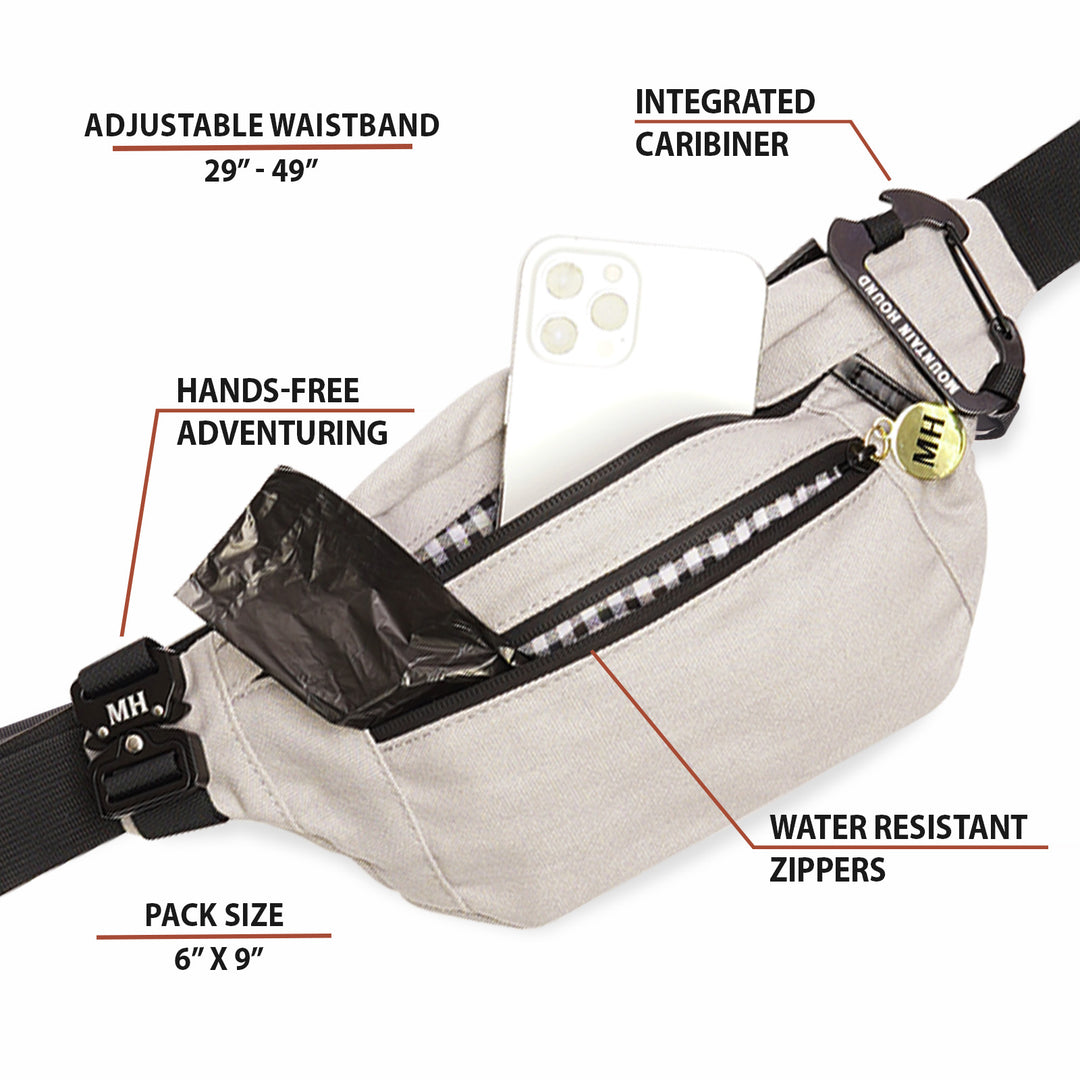
This is the system behind the [Mountain Hound Adventure Pack](/pages/the-adventure-pack) — our Utility Fanny Pack and Adventure Bungee Leash are designed to work together as a single hands-free system. The leash clips into the pack's built-in clip with one hand in seconds.
### Option 2: Hands-free running leash only
Some leashes clip around your waist directly without a pack. These work well for running but offer no storage and can be uncomfortable for everyday walking.
### Option 3: Cross-body leash
The leash goes over your shoulder and across your chest. Less common but useful for certain body types or activities.
**Our recommendation:** The waist pack + bungee leash combo is the most versatile, comfortable, and functional setup for most dog owners — whether you're on a trail, a sidewalk, or anywhere in between.
---
## Choosing the Right Leash for Hands-Free Walking
Not every leash works well for hands-free walking. Here's what to look for:
### Bungee vs. fixed length
A **bungee leash** has a shock-absorbing elastic section that softens your dog's pulling force. This is essential for hands-free walking because without a bungee, every lunge your dog makes transfers directly to your hips. With a bungee, that force is absorbed before it reaches you.
The [Mountain Hound Adventure Bungee Leash](/products/bungee-leash) adjusts from 4.5 to 5.5 feet with an additional 4 inches of bungee extension — long enough for comfortable walking and short enough for controlled hiking.
A **fixed leash** works better if your dog is already well-trained and rarely pulls. The [Rover Fixed Leash](/products/fixed-leash) is a great option for calmer dogs or those who've completed leash training.
### Clip system
Your leash needs a reliable clip-in mechanism that works with your fanny pack or belt. Single-hand operation is important — you shouldn't need to fumble with hardware while your dog is moving.
### Length
For hands-free walking, 4.5–6 feet is the sweet spot. Too short and your dog feels restricted. Too long and you lose control on busy sidewalks or tight trails.
### Attachment to a harness vs. collar
For hands-free walking, always attach to a **harness** if your dog pulls. A harness distributes force across your dog's chest and shoulders — much safer than a collar, which puts pressure on the neck.
---
## How to Transition Your Dog to Hands-Free Walking
Most dogs adapt quickly, but a few sessions of practice makes the switch much smoother.
### Step 1: Introduce the pack first
Before clipping your dog in, let them sniff the fanny pack. Put it on yourself and go about your normal routine for a few minutes. Dogs are curious about new things — let them investigate on their own terms.
### Step 2: Start in a familiar, low-distraction environment
Your backyard or a quiet street is ideal for the first session. Avoid busy parks or trails until your dog is comfortable with the new setup.
### Step 3: Clip in and walk normally
Clip your leash into the pack and start walking. Your dog will likely feel the difference in how the leash moves — it connects to your hips instead of your hand, which feels slightly different to them.
### Step 4: Practice "check-ins"
Encourage your dog to check in with you frequently by rewarding them when they glance back at you or walk calmly at your side. This builds the habit of staying close rather than pulling.
### Step 5: Gradually increase distraction levels
After two or three calm sessions, move to more distracting environments — busier streets, parks, then trails. By this point most dogs have fully adapted.
**Note:** Hands-free walking works best with dogs who already have basic leash manners. If your dog is an intense puller or reactive to other dogs, work on those basics first before switching to hands-free.
---
## Safety Tips for Hands-Free Walking
Going hands-free doesn't mean going careless. Keep these tips in mind:
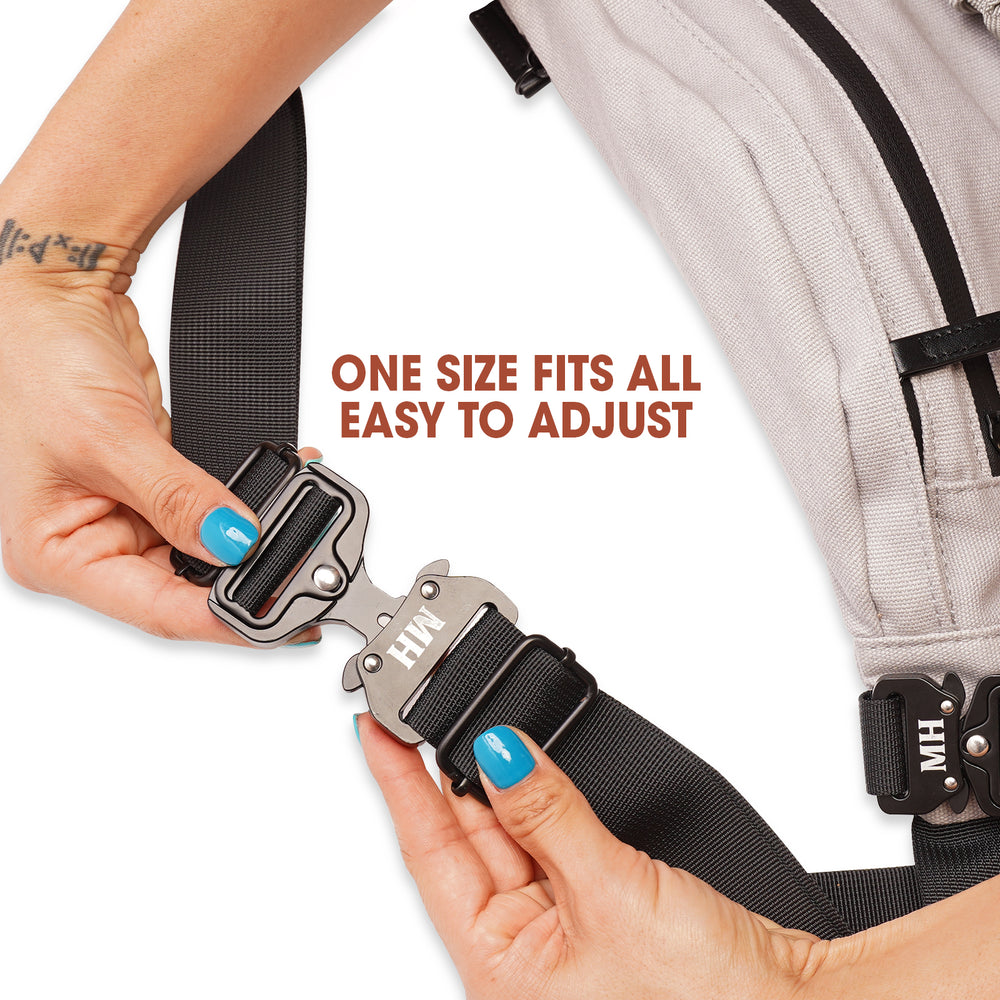
**Use a quick-release buckle.** Your fanny pack or belt should have a buckle that can be released immediately if something goes wrong — your dog falls, a car comes, or you need to react fast.
**Always attach to a harness with strong pullers.** A collar isn't safe for hands-free walking with dogs who lunge. A Y-front harness distributes force safely across the chest.
**Keep a secondary handle available.** The [Mountain Hound Adventure Bungee Leash](/products/bungee-leash) includes a neoprene-padded handle so you can grab the leash directly if you need immediate control — for road crossings, other dogs approaching, or any situation requiring a firm hold.
**Don't use hands-free with an untrained dog in high-traffic areas.** Hands-free is a tool for dogs with good leash manners. In busy environments, direct hand control is always safer with unpredictable dogs.
**Include the car seat buckle on drives.** The Mountain Hound Bungee Leash includes a car seat buckle — always clip your dog to a proper harness during car rides, not just a collar.
---
## The Adventure Pack: Everything You Need in One System
If you're ready to go fully hands-free, the simplest path is the [Mountain Hound Adventure Pack](/pages/the-adventure-pack) — our Utility Fanny Pack and Adventure Bungee Leash designed from day one to work together.
**What's included:**
- Adventure Bungee Leash (4.5–5.5 ft, shock-absorbing, 7 colors)
- Utility Fanny Pack (6"×9", fits phone/keys/wallet/treats, adjustable 29"–49")
- Built-in one-hand leash clip system
- Car seat buckle
The pack clips on your hips, the leash clips into the pack, and you're completely hands-free in seconds. No separate belt. No extra hardware. Just clip in and go.
Trusted by 10,000+ adventure dogs. Lifetime guaranteed.
[**Shop the Adventure Pack →**](/pages/the-adventure-pack)
---
## Frequently Asked Questions
**Is hands-free walking safe for all dogs?**
Hands-free walking is safest for dogs who already walk politely on a leash. Dogs that pull hard, lunge, or are reactive to other animals require more direct control — work on leash manners before switching to hands-free.
**What size dog can use a hands-free leash?**
The Mountain Hound Adventure Bungee Leash is suitable for dogs of all sizes. The bungee helps manage the force from larger dogs, while the adjustable length works comfortably for small to large breeds.
**Can I use any fanny pack with a leash?**
You can, but most regular fanny packs aren't designed for it. The Mountain Hound Utility Fanny Pack has a purpose-built leash clip that lets you attach and release the leash with one hand — a feature that makes a significant difference in real-world use.
**How long does it take for a dog to get used to hands-free walking?**
Most dogs adapt within 2–3 walks. The transition is smooth because the leash itself functions the same way — the only change is where it attaches (your hips instead of your hand).
---
*Built for Adventure™ — Mountain Hound has been equipping dog owners for trails, walks, and everything in between since 2020. All products are lifetime guaranteed.*