Dog Hiking Gear: The Essential List for Adventure Dogs (2026)

Taking your dog on a hike is one of the best things you can do together. The fresh air, the trails, the way their whole body wiggles when you lace up your boots — there's nothing quite like it. But a great trail day starts with the right gear.
This is the essential dog hiking gear list, built by dog owners who actually hike. No fluff, no filler — just what you actually need, what you can skip, and how to put it all together.
The Non-Negotiables
These are the items every adventure dog needs on the trail. No exceptions.
1. A Reliable, Trail-Ready Leash
Your leash is the most important piece of gear you'll bring. A cheap leash that breaks, a clip that fails, or a handle that cuts into your hand after two miles can ruin a trail day — or worse, put your dog in danger.
What to look for in a hiking leash:
- Heavy-duty hardware: The clasp and D-rings need to hold under pressure. Look for solid metal construction, not lightweight plastic.
- Comfortable handle: You'll be holding this leash for hours. Neoprene padding makes a significant difference on longer hikes.
- The right length: 5–6 feet is ideal for most trails. Long enough for your dog to explore slightly ahead, short enough to maintain control around other hikers.
- Bungee absorption: If your dog pulls at all, a bungee section softens the impact on your wrist and your dog's neck — especially important on downhills when dogs tend to surge forward.
The Mountain Hound Adventure Bungee Leash was built specifically for this. Adjustable from 4.5 to 5.5 feet with a shock-absorbing bungee core, neoprene handle, heavy-duty hardware, and triple-weight stitching — plus a car seat buckle for the drive to the trailhead. Lifetime guaranteed.
2. A Hands-Free System for Longer Hikes
On short neighborhood walks, holding a leash is fine. On a multi-mile trail, it gets old fast — especially if you're using trekking poles, carrying a pack, or scrambling over rocks.
A hands-free leash system lets your dog stay safely attached while both your hands stay free for whatever the trail throws at you.
The best setup for most hikers is a waist-mounted fanny pack with a leash clip — your dog connects to your hips, not your hand, and you have storage for essentials right on your body.
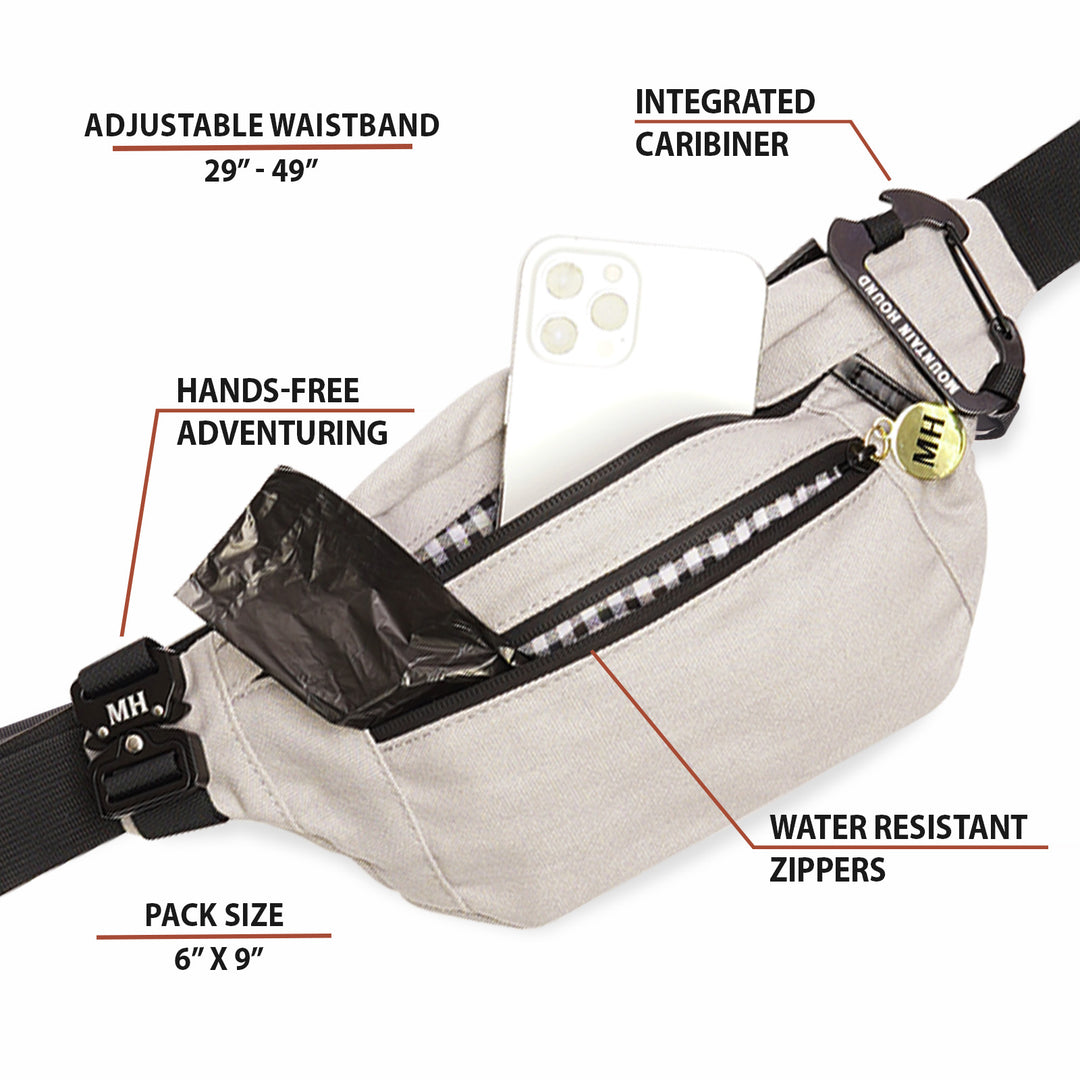
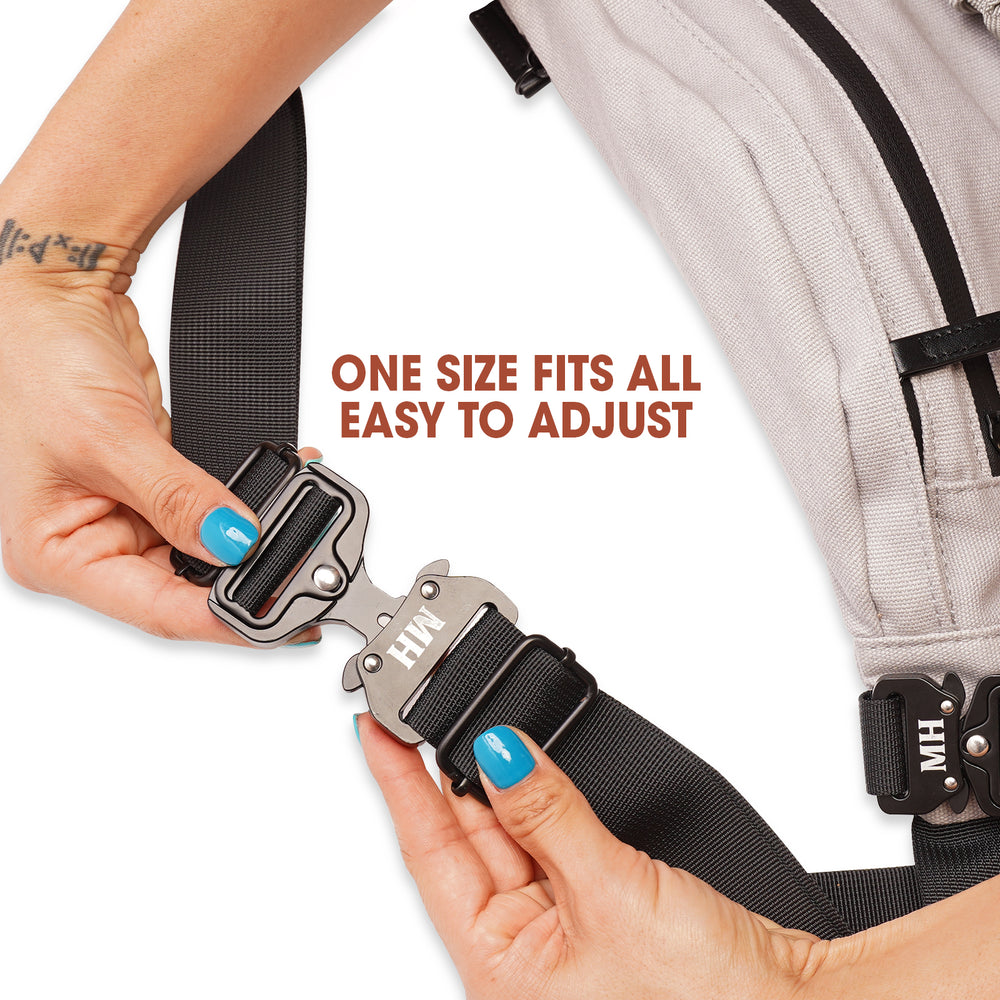
The Mountain Hound Utility Fanny Pack was designed specifically for this. It has a built-in leash clip, fits your phone, keys, wallet, and dog treats, adjusts from 29"–49", and pairs directly with the Adventure Bungee Leash. Together they're the Adventure Pack — the complete hands-free hiking system.
3. Water — For Both of You
Hydration on the trail isn't optional for dogs. The general rule is one ounce of water per pound of body weight per day — and active hiking in warm weather can double that need.
What to bring:
- A collapsible silicone bowl (lightweight, packable, easy to use one-handed)
- At least 8 oz of water per 30 minutes of hiking for an average-sized dog in mild weather
- More in heat — dogs overheat faster than humans, especially brachycephalic breeds
Never let your dog drink from standing trail water — giardia and other parasites are a real risk.
4. Poop Bags — More Than You Think You Need
Always bring twice as many bags as you think you'll need. Trails are shared spaces, and leaving waste behind damages trail access for everyone.
Pro tip: The Mountain Hound Utility Fanny Pack has a carabiner specifically for clipping a poop bag holder to the outside of the pack — keeping bags accessible without digging through your stuff at an inconvenient moment.
5. Identification
Your dog should wear ID on every hike. Even well-trained dogs can bolt in unfamiliar territory — a surprising sound, another animal, an unfamiliar smell can trigger prey drive in even the calmest dog.
Must-have ID:
- Current ID tag with your phone number
- Microchip (and confirm it's registered with current contact info)
- Consider a GPS collar for off-leash hiking areas
The Important Extras
These aren't strictly essential, but they make a meaningful difference on longer or more challenging hikes.
Dog First Aid Kit
Most human first aid kits work for dogs too, but a few dog-specific additions are worth having:
- Tick removal tool
- Styptic powder (stops minor nail bleeds)
- Saline solution for eye or wound flushing
- Tweezers
- Vet wrap / self-adhesive bandage
- Benadryl (consult your vet on dosage — useful for bee stings)
Pack it in a small waterproof bag and keep it in your hiking pack, not your dog's pack.
Dog Boots
Whether or not your dog needs boots depends entirely on where you're hiking. Rocky terrain, hot pavement, salt and ice in winter, or sharp desert vegetation can all damage paw pads.
Signs your dog may need boots:
- They start lifting paws or limping after a few miles
- You're hiking on very hot surfaces (asphalt or dark rock in summer)
- Significant cactus, shale, or jagged rock terrain
The adjustment period matters — let your dog walk around the house with boots on before hitting the trail.
Paw Balm
Even without boots, paw balm is worth carrying on longer hikes. It conditions and protects paw pads, helps with dryness and cracking, and can soothe minor irritation at the end of a hard day on the trail.
Apply before a hike on rough terrain and after as part of a post-hike recovery routine.
What You Don't Need
The dog hiking gear market is full of products that look useful but add weight and complexity without real benefit. Here's what most adventure dogs don't need:
Dog backpacks (for most dogs): Unless you're doing multi-day backpacking, your dog doesn't need to carry their own gear. A dog pack adds weight and can cause shoulder and spine issues on long descents. Leave it at home unless you have a genuine use case.
Extendable / retractable leashes: These are not trail leashes. They offer poor control, are prone to mechanical failure, and create serious tangles in multi-dog or multi-hiker situations. Leave the retractable at home and use a quality fixed or bungee leash.
Dog life jackets (unless you're near water): If your hike includes river crossings or lake swims, a dog life jacket is smart. Otherwise, leave it.
The Complete Dog Hiking Gear Checklist
Essential:
- [ ] Trail-ready leash (bungee recommended for pullers)
- [ ] Hands-free system for longer hikes (pack + leash combo)
- [ ] Water + collapsible bowl
- [ ] Poop bags (more than you think)
- [ ] ID tag + confirmed microchip registration
Important extras:
- [ ] Dog first aid kit
- [ ] Dog boots (terrain-dependent)
- [ ] Paw balm
- [ ] Tick prevention (applied before the hike)
- [ ] Treats (for recall and positive reinforcement on trail)
- [ ] Towel for post-hike cleanup
Leave behind:
- [ ] Retractable leash
- [ ] Dog pack (unless multi-day)
The Adventure Pack: The Only Dog Hiking Gear You Really Need
If you only upgrade one thing for your next trail day, make it your leash and hands-free system. Everything else is supplemental — but getting this wrong makes the whole hike harder.
The Mountain Hound Adventure Pack is the hands-free hiking system we built because we couldn't find one that worked the way we wanted. The Utility Fanny Pack and Adventure Bungee Leash work as a single connected system — clip in the leash with one hand, go fully hands-free, and carry your essentials on your hips.
Trusted by 10,000+ adventure dogs. Trail-tested. Lifetime guaranteed.
Trail Etiquette With Your Dog
A quick note because trail access for dogs is earned, not guaranteed — and poor behavior from a few dogs can result in restrictions that affect everyone.
Always:
- Keep your dog leashed unless you're in a designated off-leash area
- Pick up after your dog — every single time, every single trail
- Yield to other hikers, horses, and cyclists
- Keep your dog close when passing other trail users
- Check local regulations before you go — some trails are dog-friendly, some aren't
Never:
- Let your dog approach other hikers or dogs without asking permission first
- Allow your dog to drink from shared water sources on the trail
- Leave waste bags on the trail (yes, people do this — please don't)
The dog-friendly trails we love exist because dog owners before us respected them. Do the same for the people who come after.
Frequently Asked Questions
How far can a dog hike? Most healthy adult dogs can hike 5–10 miles comfortably. Conditioning matters — start with shorter hikes and build up. Puppies under 18 months should avoid strenuous hiking; their joints are still developing.
Do dogs need boots for hiking? Not always. Many dogs hike hundreds of miles without boots. If your dog is showing signs of paw discomfort — lifting paws, licking excessively after hikes, visible cuts or cracks — boots are worth trying.
What's the best leash for hiking? A 5–6 foot leash with a shock-absorbing bungee section and a comfortable handle. The Mountain Hound Adventure Bungee Leash is specifically designed for hiking — heavy-duty hardware, neoprene handle, and a bungee that softens the pull on both you and your dog.
Can I let my dog off-leash on hiking trails? Only in designated off-leash areas, and only if your dog has reliable recall. Even then, wildlife encounters, other hikers, and unfamiliar terrain create unpredictable situations. When in doubt, keep them on leash.
Built for Adventure™ — Mountain Hound has been equipping dog owners for trails, walks, and everything in between since 2020. All products are lifetime guaranteed.